China’s 15th Five-Year Plan and the Commercialization of Quantum Technology
China 15th Five Year Plan
The announcement of China’s 15th Five-Year Plan (15th FYP, 2026–2030) clearly positions the commercialization of quantum technology as a new pillar of national economic growth, marking a dramatic uptick in the global technological competition. This ambitious agenda, which was approved by the 20th CPC Central Committee’s Fourth Plenum in October 2025, represents a significant change from concentrating only on scientific research to requiring broad commercial use.
Beijing is implementing a concerted, state-led drive to convert significant public investment into commercially viable quantum goods and services in an effort to promote an independent and technologically advanced modern industrial system.
You can also read AUKUS Tests QuantX Lab Quantum Clocks to National Security
A Strategic Pivot: From Research to Revenue
Beijing’s main strategic goals of fostering “new quality productive forces” and achieving “high-level scientific and technological independence” are carried out in the 15th FYP. The new plan greatly increases the priority of quantum information, whereas the previous 14th FYP (2021-2025) designated it as one of seven cutting-edge sectors, mostly for basic research.
Critical industries, including quantum technology, are required to “become new economic growth points” according to the main policy language. This calls for faster commercialization directly. The strategic objective is to industrialize sophisticated quantum capacity, potentially generating trillion-yuan markets in vital industries including national security, logistics, materials research, and finance. China’s deep understanding of the competitive environment in the world, where major nations view quantum technology as essential to future scientific superiority, is reflected in this emphasis on economic empowerment.
Commercial Milestones Driving the Shift
China’s quantum industry is poised for industrial deployment, as evidenced by recent, noteworthy technological accomplishments that support this major policy shift.
One significant commercial milestone in superconducting quantum computing is the implementation of a system built on the University of Science and Technology of China’s (USTC) “Zuchongzhi 3.0” architecture. Similar to and competing with commercial initiatives by US leaders, this technology is currently made available for commercial use through the “Tianyan” quantum cloud platform, which is run by China Telecom Quantum Group (CTQG) and QuantumCTek.
Additionally, a concrete commercialization milestone has been reached with the announced commercial sales of the “Hanyuan-1,” China’s first atomic quantum computer. The Chinese Academy of Sciences developed the Hanyuan-1, which has been sold to both local and foreign clients, including Pakistan and a China Mobile subsidiary.
Using locally produced, high-precision lasers, the Hanyuan-1 is notable for its purported independence from Western supply networks. For usage in financial modeling and logistics optimization, its low power consumption and lack of cryogenic cooling make it an extremely appealing and useful solution. These operational achievements give the 15th FYP the empirical assurance it needs to vigorously advance the industrial front.
Quantum Security and the PQC Imperative
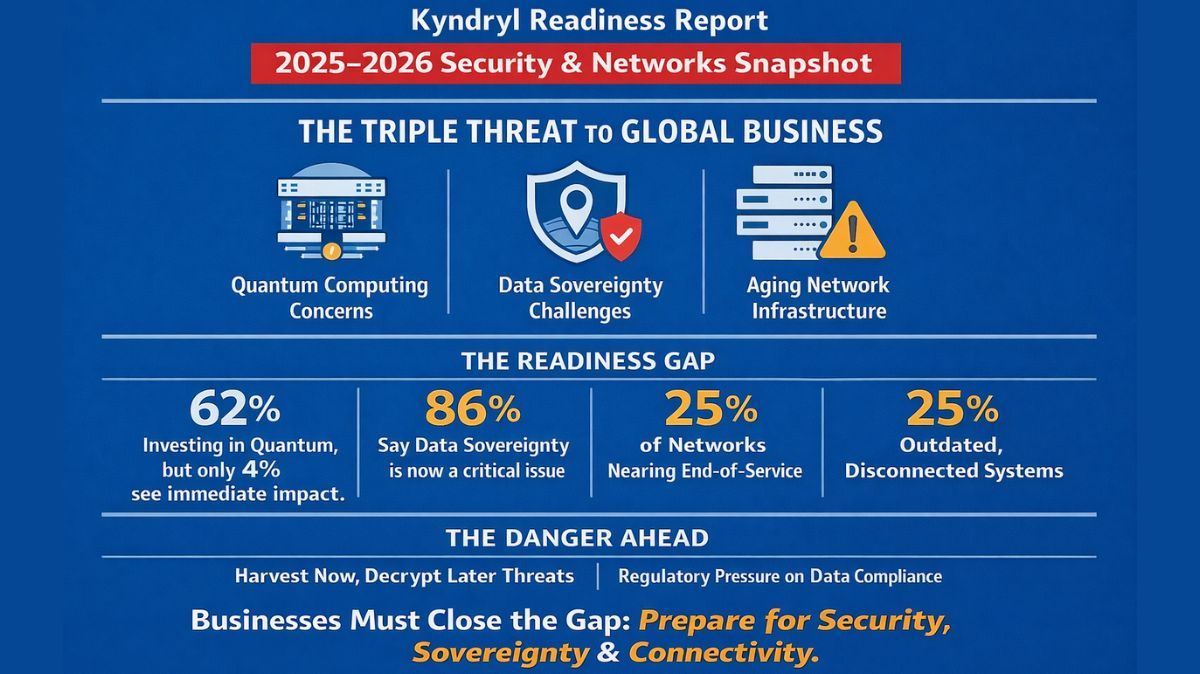
The preservation of digital sovereignty and national security is inextricably linked to quantum technology, according to Beijing. Post-Quantum Cryptography (PQC), also known as quantum-safe cryptography, must be integrated into state and industry infrastructure as a key element of the 15th FYP.
Preventing “Store Now, Decrypt Later” attacks, in which encrypted data is taken today and then readily cracked by future, very advanced quantum computers, is a top national security issue. China wants to create a safe, independent digital environment by emphasizing national standards and utilizing its dominant position in the world of quantum communications, particularly the Micius satellite and vast networks of quantum fiber.
Building the first “Beijing-Shanghai Trunk Line” in history is already progressing towards a national quantum communication network prototype. There are already pilot applications in the electricity system, government affairs, and financial sector, where banks are utilizing quantum encryption to secure data center communication. Quantum communication is now the most commercialized field.
You can also read PsiQuantum and Lockheed Martin to Accelerate FTQC Quantum
Global Implications and the Race for Dominance
The quantum agenda of the 15th FYP has significant worldwide ramifications and exacerbates the techno-nationalist competition with Western countries. With an estimated public expenditure of over $15 billion, China’s state-coordinated strategy sets a high standard for other countries and enables it to impose a single national vision from basic research to industrial deployment, making it a strong worldwide competitor.
The need for supply chain independence is critical. The Hanyuan-1’s successful incorporation of a domestic laser exemplifies China’s objective of becoming technologically independent in key areas. If this push is effective throughout the quantum stack, it would separate China’s advancement from global supply chains, which could lead to a fragmentation of the global technology scene.
China is also actively working to export its sovereign technology. Hanyuan-1’s sale to Pakistan is indicative of concurrent attempts to export its quantum technology and related digital security frameworks, frequently through programs such as the Digital Silk Road. By providing a comprehensive, independent technology stack that includes safe quantum computing and communications services, China can establish a rival digital ecosystem and draw in partners that are leery of Western-dominated technologies.
The Acceleration Period
The 15th FYP signifies the clear start of an accelerated phase of quantum industrialization, despite a number of obstacles still standing, such as high building and operating costs, the current state of quantum computers’ poor error-correction capabilities, and a severe lack of compound talents in the sector.
Over the course of the next five years, the nation is anticipated to embark on “major projects on quantum technology” in an effort to overcome crucial “choke-point” links, including high-performance detectors and low-temperature electronic components. It is anticipated that industrial clusters centered on “quantum +” would emerge in cities such as Hefei, Beijing, Shanghai, and Shenzhen, drawing businesses from all points of origin.
Additionally, there will be a greater integration of quantum technology with domains like blockchain and artificial intelligence (AI), leading to the development of new business models like “quantum AI,” which is used to train more effective models.
By emphasizing commercial application and encouraging self-reliance, the 15th FYP sets up China for a significant transition between 2026 and 2030, providing a powerful boost to high-quality development and assisting China in taking the lead in international scientific rivalry.
You can also read Quantum Computing Cybersecurity: Redefines Data Protection


Thank you for your Interest in Quantum Computer. Please Reply