A Quantum Leap for Portfolio Optimization: An Understanding of CVaR-VQA
Researchers are looking into new ways to use quantum computing to solve challenging financial problems, and the discipline of quantum finance is developing quickly. Portfolio optimization, a well-known challenge for traditional computers, is one important area of focus, particularly as the quantity of investment assets increases. A recent discovery demonstrates how well a particular quantum algorithm, the Conditional Value at Risk-based Variational Quantum Algorithm (CVaR-VQA), works to solve this problem with astounding precision.
You can also read Enhanced Yellow Fluorescent Protein EYFP as a Protein Qubit
The Role of Conditional Value at Risk (CVaR)
Conditional Value at Risk (CVaR) is the fundamental component of this quantum optimization technique. A complex risk indicator, CVaR is especially useful for investors that place a high priority on reducing downside risk. CVaR notably focusses on the possibility of significant losses, in contrast to other straightforward metrics that might just include average returns. This means that it measures the predicted shortfall in the worst-case scenarios rather than just the usual volatility, which makes it extremely relevant for strong portfolio management where safeguarding against large financial downturns is crucial. The algorithm seeks to build portfolios that are more resilient to unfavorable market conditions by prioritizing CVaR as the optimization goal.
Variational Quantum Algorithms (VQAs): The Hybrid Approach
One kind of variational quantum algorithm (VQA) is the CVaR-VQA. VQAs combine the advantages of both quantum and traditional computing methods, making them a type of hybrid quantum-classical algorithm. In a VQA, a quantum computer conducts sophisticated quantum operations, while a classical computer manages the optimization of parameters for the quantum circuit. By modifying these parameters iteratively in response to the outcomes of the quantum computations, the classical computer is able to direct the quantum computer towards a solution. One of the main features of their design is this hybrid quantum-classical workflow, which makes them ideal for the noisy intermediate-scale quantum (NISQ) devices of today.
CVaR-VQA: Tailored for Financial Optimization
The intricacies of portfolio creation were specifically examined using the CVaR-based Variational Quantum Algorithm (CVaR-VQA). Compared to many other quantum techniques, this algorithm has the following special advantages:
Customized Cost Functions: One of CVaR-VQA’s main advantages is its adaptability, which enables researchers to create unique cost functions. This is a big change from a lot of existing quantum algorithms, which frequently need the problem to be transformed into a standard format, which could cause the original financial problem’s subtleties to be lost.
Natural Problem Representation: CVaR-VQA makes it possible to express the financial problem more naturally by permitting bespoke cost functions. Because it more precisely captures the particular goals and limitations of portfolio optimization, this direct mapping can result in better solutions.
Reduced Qubit Count: Given the restricted number of stable qubits available on current quantum hardware, this flexibility in issue formulation can also help to reduce the number of qubits required for the computation.
Sampling-Based Approach: The creation of a novel solution to the portfolio optimization problem that was especially designed for this quantum sampling-based technique was a significant breakthrough in this study. This formulation enables the algorithm to explore the large solution space of portfolio configurations by efficiently utilizing quantum sampling capabilities.
You can also read Quantum METTS: Minimally Entangled Typical Thermal States
Experimental Validation and Performance
Extensive trials were conducted to demonstrate the efficiency of the CVaR-VQA.
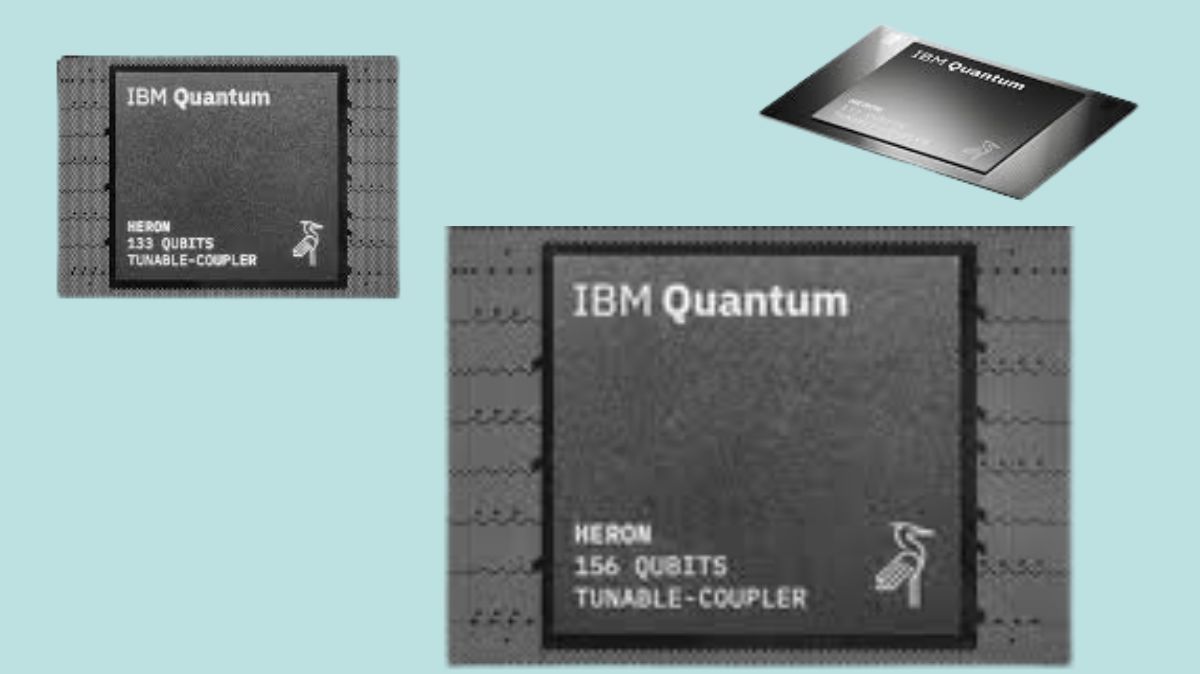
Hardware Used: IBM’s Heron processors were used to run circuits with more than 100 qubits in the research. This suggests that the experiments are being conducted using sophisticated, practical quantum gear.
Achieved Accuracy: The combined quantum-classical workflow’s solution error of only 0.49% was exceptionally low. Comparing this low error rate to using only traditional local search techniques reveals a notable increase in accuracy. The best-performing circuits showed a relative solution error of 0.49%, highlighting the promise of this hybrid technique.
Impact of Circuit Complexity: According to an interesting study finding, using more intricate quantum circuits, those that are more difficult for traditional computers to simulate, may actually result in improved convergence and more efficient optimization. This suggests a future era in which, as quantum hardware advances and can execute progressively more complex circuits, quantum procedures may in fact perform better than classical methods.
Hybrid Superiority: In addition, the researchers regularly discovered that the quantum algorithm performed better when combined with a classical post-processing step, specifically local search, than when either method was employed alone. This supports the power of the hybrid approach, where quantum computing excels at exploring complex landscapes while classical methods give refinement and precision.
Future Challenges and Outlook
The researchers admit that scaling these quantum approaches to far bigger issue sizes where classical solvers really falter remains a significant challenge, even though the results show a promising step towards utilizing quantum computing for banking. Techniques to lessen the computing needs of quantum-classical training will be the main focus of future research. In order to apply these potent strategies to even bigger and more complicated portfolios and move the quantum finance revolution closer to broad adoption, this involves looking into techniques like parameter transfer and classical-only training modes.
You can also read Strangeworks Acquires Quantagonia to Boost AI and Quantum


Thank you for your Interest in Quantum Computer. Please Reply