The Quantum Paradox: How Silicon’s Future is Being Redefined by Next-Gen Computing
The Quantum Paradox
With the quick development of quantum computing, the digital era, which was founded on stable, predictable classical semiconductors, is on the verge of a significant transition. The silicon-based semiconductor industry’s long-standing dominance in classical computation may be challenged by quantum computing, a fundamental change that might drastically alter the industry’s future. It claims to provide answers to difficult issues that even the most advanced traditional supercomputers are unable to solve, like financial modelling, drug development, and materials science simulations.
The Quantum Paradox has emerged as a result of this development: will the silicon chip become outdated due to this next-generation technology driven by exotic quantum bits, or will it paradoxically become the biggest driver of semiconductor innovation? Experts agree that quantum computing is a potent new instrument that expands the capabilities of computing rather than a conundrum meant to overthrow silicon.
You can also read How the Interacting Boson Model Describes Atomic Nuclei
Beyond the Bit: The Mechanics of Quantum Advantage
Information is stored in classical computers as bits, which can only exist in two states: 0 and 1. In contrast, quantum computers make use of quantum bits, or qubits, which capitalize on the special entanglement and superposition phenomena of quantum mechanics. A qubit can exist concurrently in a combination of both 0 and 1 states superposition. Entanglement is when two qubits get so intertwined that, despite their physical separation, the state of one instantly affects the state of the other.
For certain jobs, such as mimicking molecular behavior, these characteristics enable next-generation quantum computers to execute computations in parallel, providing an exponential gain in processing capacity. The point at which a quantum machine can resolve an issue that a classical supercomputer cannot in a reasonable amount of time is known as quantum advantage.
You can also read CMTS Cryogenic Muon Tagging System for Quantum Processors
The Symbiotic Future: Complement, Not Replacement
Most industry analysts concur that hybrid quantum-classical designs will define the future, preferring a complementary connection over a total replacement of conventional chips. While silicon-based high-performance computing (HPC) will probably handle most general-purpose jobs, control systems, and data input/output in conjunction with quantum co-processors, quantum computers are specialized for certain computationally intensive activities.
The sheer amount of data processing required globally guarantees a long and stable future for conventional silicon, even though the vast, general-purpose CPU market may plateau when some high-value computational workloads move to quantum systems. This change is a result of the increased focus on new computing paradigms since classical scaling, which has historically been guided by Moore’s Law, faces fundamental physical limitations, including heat dissipation and quantum tunneling.
You can also read Burcu Ozden Secures $800K For Quantum Materials Research
Cryogenic Electronics and New Semiconductor Avenues
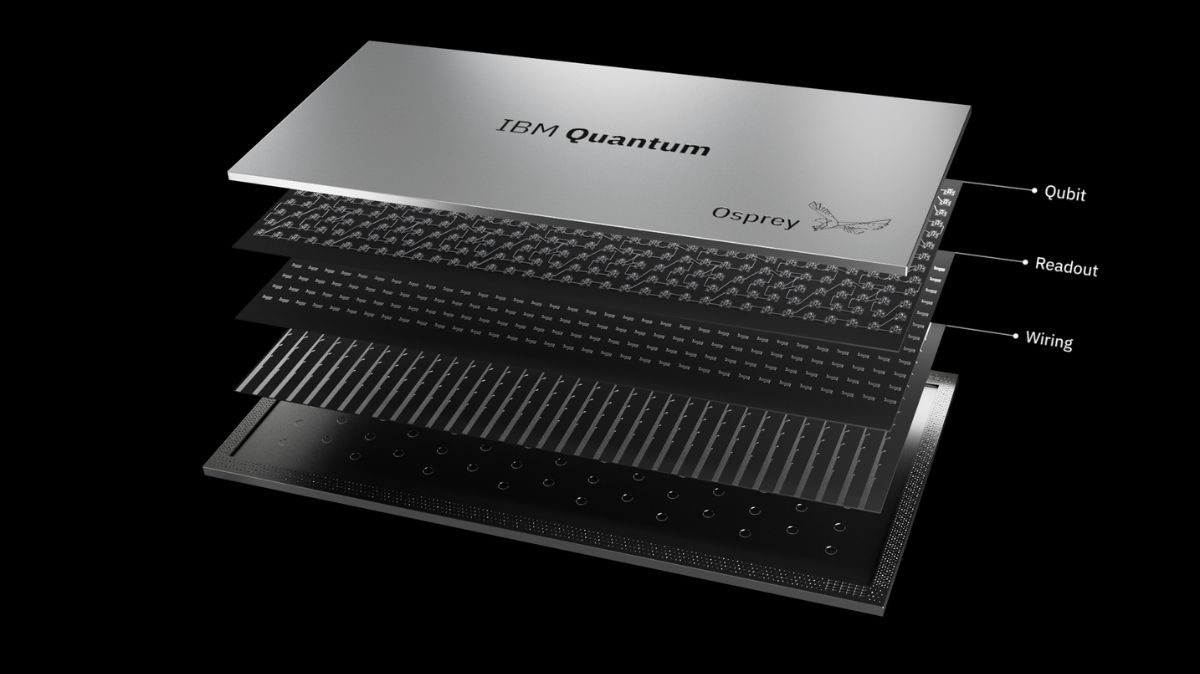
The classical semiconductor industry is already facing substantial pressures and opportunities as a result of the unrelenting pursuit of quantum technology. Inside intricate cooling systems called dilution refrigerators, quantum computers must function at incredibly low temperatures, often millikelvins lower than deep space. To regulate the qubits in quantum processors, complex classical electronics are needed. A specialized and high-performance industry that is a direct result of the quantum push is being created by the development of cryogenic CMOS, specialized silicon control chips that must operate dependably and effectively at extremely low temperatures.
Furthermore, the production of the extremely precise quantum chips depends on the sophisticated fabrication techniques and highly developed manufacturing infrastructure created for the silicon sector. Whether such quantum chips are composed of silicon carbide or superconducting materials, expertise in semiconductor manufacturing directly contributes to the creation of quantum hardware. Ironically, one of the most promising physical substrates for producing stable qubits, specifically silicon quantum dots, is silicon, the building block of classical computing. In the end, this approach benefits the entire silicon ecosystem by utilizing the current, well-established manufacturing infrastructure for mass-produced, scalable quantum processors.
You can also read South Dakota State University News in Quantum Magnetics
Quantum Influence on Chip Design and Global Security
Beyond hardware control, quantum capabilities have the potential to completely transform the way traditional circuits are designed. The development of new materials, such as new dielectrics, that could result in faster and more energy-efficient silicon devices is made possible by the possibility for quantum algorithms to mimic atomic and molecular interactions with previously unheard-of accuracy. Furthermore, the intricate process of Very Large-Scale Integration (VLSI) design, which entails routing millions of connections and optimizing chip layout, is a huge optimization challenge that is ideal for quantum-powered tools.
But the single biggest threat to contemporary cybersecurity is the development of quantum computing, since a strong enough quantum computer employing Shor’s algorithm may crack the fundamental encryption systems protecting international communications. This issue is driving the global competition for Post-Quantum Cryptography (PQC) and necessitating a comprehensive revamp of security systems worldwide. The implementation of these novel, quantum-resistant classical algorithms necessitates a substantial financial outlay as well as the creation of sophisticated, specialized silicon chips that can effectively process these intricate new cryptographic algorithms.
Redefining Silicon’s Destiny
The Quantum Paradox is a call for evolution rather than a threat of replacement. The future of silicon is changing from being the only computing powerhouse to becoming the adaptable, fundamental component that makes a wide range of computing ecosystems possible.
Silicon assumes complex new functions in this new era: it becomes the Platform (via silicon-based quantum dots), the Enabler (with Cryo-CMOS for quantum control and improved PQC chips), and the Optimizer (through quantum-powered software tools that create better classical processors). The very quantum technology that was previously believed to be its greatest competitor is driving the semiconductor industry into a new era where traditional chips are quicker, smaller, and more integrated than ever before.
You can also read AI-Driven Automated Quantum Algorithm Discovery for Chemistry


Thank you for your Interest in Quantum Computer. Please Reply