The pursuit of quantum supremacy
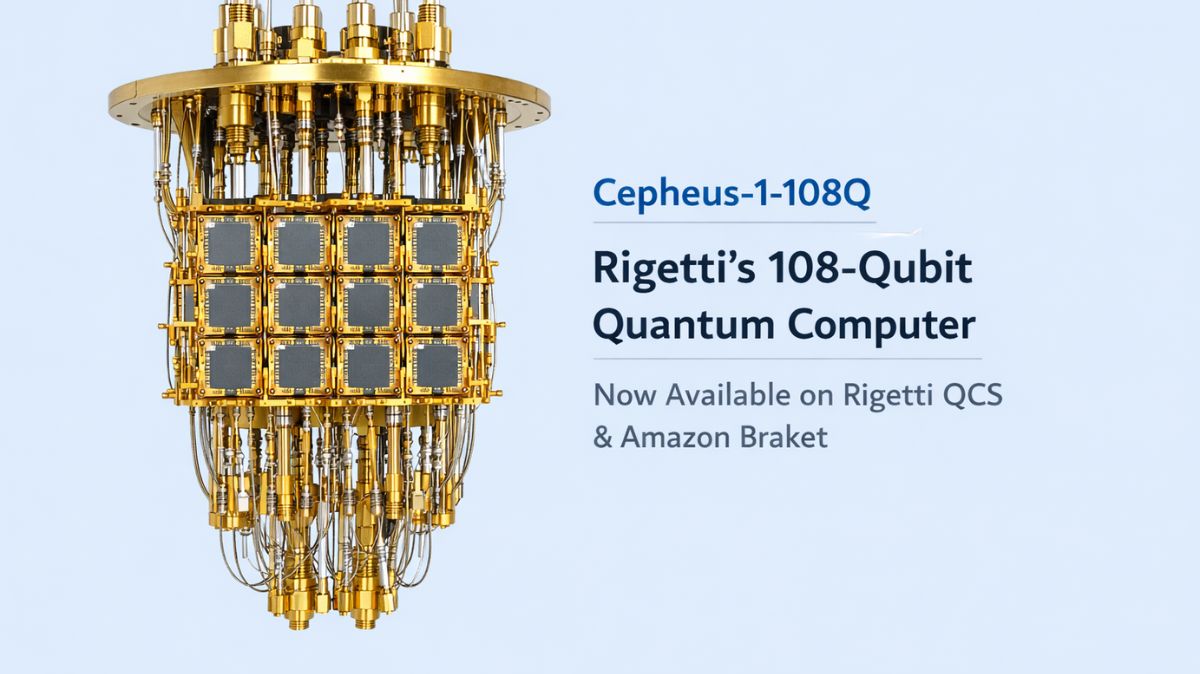
The crucial point at which quantum systems can be shown to perform better than classical supercomputers is frequently discussed in terms of sophisticated algorithms and exponentially growing qubit counts. However, the cryogenic syste a remarkable engineering achievement is the real driving force behind this computational revolution. These extremely advanced freezers, which are mainly referred to as dilution refrigerators, frequently submerge quantum computers in temperatures far lower than those of the natural world in order to create the delicate quantum states needed for processing.
100 times colder than space’s 2.7 Kelvin, quantum labs must achieve 10 mK. A tenth of a degree above zero. In order to close the gap between theoretical promise and practical realization, this cold environment is essential, not just a technological curiosity.
You can also read Texas Blockchain Council Advances Blockchain Technology
Suppressing the Thermal Enemy: Why Extreme Cold is Critical
The qubit, the basic building block of quantum information, is at the centre of quantum computing. It uses delicate states like entanglement and superposition to carry out computations. Environmental influence, especially thermal noise and fluctuations, can greatly affect these states. The qubit may “decohere,” suddenly losing its quantum information and adding mistakes to the calculation, due to any stray heat or vibration.
The only approach to effectively inhibit this thermal enemy is to cool the processor to millikelvin temperatures. The suppression of phonons, or quantised vibrations, in materials that convey heat and disturb qubit states is the fundamental idea. By 10 mK, thermal energy is decreased to levels where quantum effects predominate, but at room temperature, thermal fluctuations are dominant. Because of this reduction in unwanted interactions, qubits can achieve coherence periods of microseconds or more, which is an essential need for carrying out intricate, error-corrected quantum circuits. Additionally, resistive heating in circuit components is one of the classical sources of electromagnetic noise that cryogenics decreases.
The Engine of Extremity: How Dilution Refrigeration Works
The multi-stage dilution refrigerators system, which takes advantage of the quantum mechanical behaviour of helium isotopes, is the technology that makes this record-breaking cold possible. Traditional pulse-tube or Gifford-McMahon freezers are used to precool temperatures to 4 K, the initial step in cooling.
Helium 3 Helium 4 Dilution Refrigerator
The helium 3 helium 4 dilution refrigerator dilution refrigerator takes over now. The two isotopes form a superfluid solution that dilutes 3 He atoms in the 4 He bath when the system cools. When 3 He diffuses from a concentrated phase into the dilute phase, heat from the surroundings is absorbed, cooling the mixing chamber to 10–15 mK. This procedure uses quantum statistics and phase transitions.
To prevent heat loss, these cryostats’ designs must be carefully optimized. Superinsulating materials and radiation shields are necessary for components to prevent thermal conduction. Furthermore, since qubit states can be disturbed by even the smallest mechanical noise, vibration isolation is crucial. Multi-layer insulation and active dampening are used in modern systems to provide the steady, long-term conditions required for carrying out intricate computations.
You can also read Cost-Effective Quantum Error Mitigation Using Tiled M0
Superconductivity: The Cornerstone of Cryogenic Hardware
Superconducting materials facilitate qubit operation and temperature control in cryogenic quantum devices. For superconducting qubits at low temperatures, aluminium and niobium must have low electrical resistance. Josephson junctions, which produce quantized energy levels for quantum states, are used to construct these qubits. Since superconductivity inhibits thermal vibrations and the superconducting gap ensures quantum state coherence, operation must occur at absolute zero.
Superconductors play a crucial role in the supporting infrastructure beyond the qubit chip. Superconducting magnets, which are necessary for stabilizing circuits or trapping ions, and low-loss transmission lines, which transport microwave control signals to and from the processor without creating harmful noise, both use them. A crucial component of the creation of quantum technology is the synergy between utilising superconducting characteristics and attaining extreme coolness.
Architectural Approaches and Performance Benchmarks
Different cryogenic requirements apply to different quantum computing architectures.
Superconducting Qubits: High-conductivity dilution refrigerators are used to achieve the millikelvin temperatures required by qubits, which run on silicon circuits. Leading systems run sub 15 mK as of 2024, including IBM’s 1,121-qubit Condor CPU. The performance benchmarks, single-qubit gate error rates fall below the critical 0.01% level needed for fault-tolerant computing, while coherence times for transmon qubits surpass 500 microseconds.
Trapped Ion Qubits: Individual ions suspended in electromagnetic fields are used in trapped ion qubits, which are mostly cooled to almost absolute zero using lasers. Cryogenics for these systems focusses more on minimizing motional heating and preserving an ultra-high vacuum environment than it does on operational temperature. Coherence times for trapped ion systems frequently surpass 10 seconds.
Compact cryogenic solutions are being commercialized by specialized companies like Bluefors and Janis, while big heavyweights like IBM and Google are leading the way in the development of this technology.
You can also read Speqtral, RAL space success with quantum comms demonstrator
Broadening the Impact: Applications and Future Challenges
Cryogenic quantum systems have the potential to transform several industries. The coherence of entangled photons is maintained by cryogenically cooled quantum memory in quantum repeaters, which is crucial for Quantum Key Distribution (QKD) in cryptography and secures international communications. Additionally, they make possible the high-fidelity simulations required for post-quantum cryptography to create quantum-resistant protocols.
Quantum computers can simulate intricate chemical interactions and molecular electronic structures that are unsolvable for classical systems with cryogenic stability in material science and drug discovery. It helps with drug-target interactions, innovative drug design, and the discovery of cutting-edge materials such as high-temperature superconductors or carbon capture catalysts.
However, contemporary cryogenic engineering faces a significant hurdle when it comes to scaling quantum computers to millions of qubits. At the moment, dilution refrigerators are large, costly, and challenging to connect with the enormous number of control electronics needed. The goal of upcoming technologies is to overcome these problems by:
- Modular and Compact Designs: Creating smaller modules that combine cooling with quantum control circuitry, like cryo-CMOS, is an example of modular and compact designs.
- Alternative Cooling Methods: Investigating alternatives such as adiabatic demagnetization refrigerators (ADRs) in order to increase efficiency and decrease bulk.
- Material Advancements: The study of high-temperature superconductors may be able to reduce the demand for intense cooling in peripheral components.
Cryogenic devices demonstrate that harnessing the quantum realm and mastering severe cold are equally significant steps in developing effective quantum technology. Temperature control, materials science, and system architecture will advance cryogenics, making it essential to modern science and technology.
You can also read Nokia News 2025: Canada’s Ottawa AI, Quantum, and 6G Era



Thank you for your Interest in Quantum Computer. Please Reply