Planqc News
Planqc has been recognized as a key participant in the fast-developing quantum computing ecosystem in Europe in a recent research that analyzed the continent’s technical landscape. As European countries step up their attempts to create industrial-scale quantum computers, the German startup is emerging as a force to be reckoned with on a global scale, able to influence the development of scalable, independent quantum technology. This acknowledgment comes at a pivotal moment as world powers compete for quantum supremacy in an area that is predicted to transform industries and reshape economic competitiveness over the course of the next 20 years.
You can also read Planqc 2025:DLR QCMobility Project Boost Quantum Transport
The Multi-Billion Dollar Opportunity
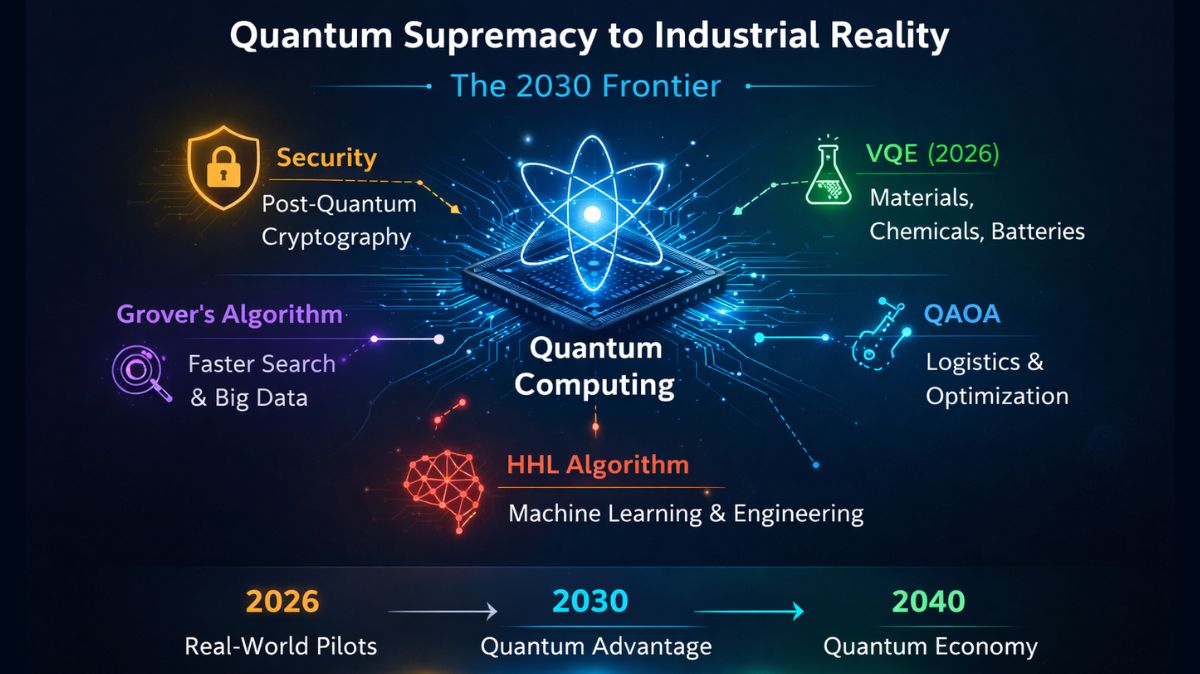
Quantum technology’s anticipated economic impact highlights the importance of these advancements. The “Wachstumspfade für Deutschland Roadmap zur wettbewerbsfähigen Hightech-Nation,” which was created by UnternehmerTUM and Boston Consulting Group (BCG), estimates that by 2040, quantum computing could release between USD 450 billion and USD 850 billion in global economic value. To avoid lagging behind China and the United States in the next big technological revolution, European countries now feel pressure to establish themselves as dominant powers due to this enormous potential for value creation.
Quantum computing is one of six priority technologies that the report sees as being crucial to Germany’s and the European Union’s future technological sovereignty and competitiveness. But becoming a leader comes with a lot of difficulties. Through a number of structural measures, it draws attention to a glaring “innovation gap”. A little over 130,000 new patents were registered in Germany in 2024, for example, a small amount compared to over 500,000 in the US and an astounding 1.8 million in China. Additionally, differences in the quantity of active “unicorns” and venture capital investment availability still provide challenges for European high-tech aspirations.
You can also read Qilimanjaro Unveils 4YFN 2026 Dates Barcelona
From Laboratory Breakthroughs to Industrial Systems
BCG and UnternehmerTUM’s main contention is that “isolated laboratory breakthroughs” won’t define the next generation of global quantum winners. Rather, the creation of scalable, industrial-grade quantum technologies will drive the market. These systems need to be firmly rooted in stable ecosystems that are distinguished by fully integrated software stacks, dependable components, and standardized designs.
Planqc is establishing itself in this transition from scholarly research to operational applications on an industrial scale. In particular, the description of Planqc as a globally competitive force in neutral atom quantum computing is a hardware approach that is becoming more and more recognized as one of the most promising paths to creating genuinely practical and scalable quantum processors. Through its emphasis on systems “designed for scalability and industrial integration,” Planqc is contributing to the conversion of European scientific brilliance into competitive platforms that are able to partake in the expected global value.
You can also read China 15th Five Year Plan Boosts Quantum Technology Growth
The Neutral-Atom Advantage
While a number of hardware modalities, such as trapped ions and superconducting qubits, are vying for supremacy at the moment, neutral-atom quantum computing is emphasized as a particularly promising avenue. As a member of this “international top group” of developers, PlanQc is acknowledged within this technological framework. Their efforts are credited with greatly raising Europe’s profile on the cutting edge of technology.
Planqc‘s success is largely due to its capacity to capitalize on the “enabling technologies” that Europe currently possesses. In areas like photonics, laser systems, precision mechanics, and cryogenics, Europe has a solid foundation. A self-governing quantum industry is built on these technologies. By combining these specialized elements into a unified, scalable architecture, businesses such as PlanQc are showing how European startups may prosper when bolstered by robust local and global ecosystems.
Strategic Recommendations for Sovereignty
To prevent Europe from falling behind, the BCG and UnternehmerTUM research recommend a targeted approach to development. This contains:
- Instead of spreading resources over too many different projects, a few globally scalable quantum computing platforms should be given priority.
- To guarantee that progress is evaluated in relation to industrial utility, milestone-based funding is being implemented.
- creating pilot lines and testbeds to speed up the transfer from theoretical models to practical applications.
The establishment of globally scalable systems integrated within resilient ecosystems is the ultimate goal, the stresses, not merely scientific discovery. It is believed that this strategy is required to ensure Europe’s status as a “high-tech nation” and to bridge the innovation gap with the United States and China.
You can also read NQFF & Qolab Collaboration targets Quantum Scaling Challenge
Looking Toward the Future
By early 2026, industrial quantum computing will be gaining traction. The identification of Planqc as a major participant underscores the potential for European companies to take the lead in specialized fields such as neutral-atom processing. The emphasis on industrial integration and sovereign technology offers a path forward for Germany and Europe to compete, even though the patent and investment gap is still substantial.
The future will necessitate sustained cooperation between established industrial players, startups, and research institutions. The shift from laboratory-based research to industrial-grade systems is the “critical juncture” that will decide whether regions reap the hundreds of billions of dollars in value anticipated by 2040. Europe’s ability to stay competitive at the forefront of the quantum frontier is demonstrated by planqc, which is currently in operation.
You can also read China Releases Origin Pilot Quantum OS For Global Developers
Thank you for your Interest in Quantum Computer. Please Reply