Neutral Atom Quantum Computing
According to Microsoft and Atom Computing, neutral atom processors show resilience through atomic replacement and coherence.
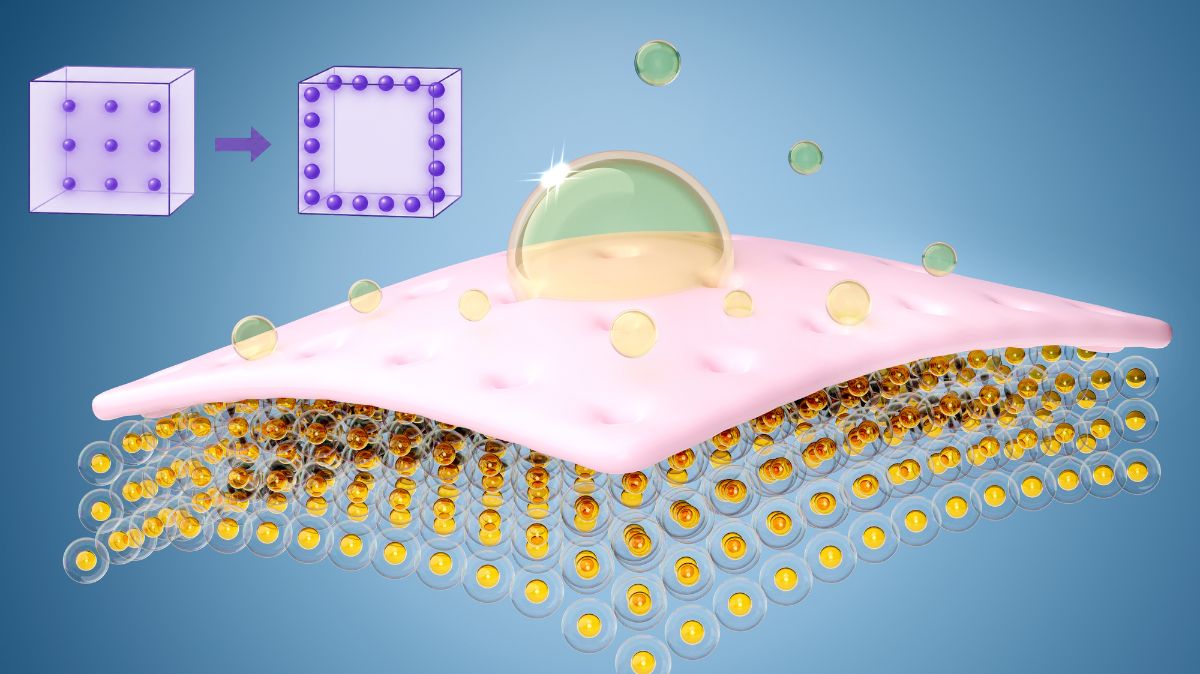
To reduce atom loss during processing, researchers have effectively shown that they can monitor, re-initialize, and replace individual neutral atoms inside a quantum processor. This significant development enables the construction of a logically encoded Bell state and the realisation of extended quantum circuits, including an astounding 41 rounds of error correction using repetition code. These accomplishments, which make use of atomic replenishment from a continuous beam and real-time conditional branching, represent a major step towards realistic, fault-tolerant quantum processing with logical qubits that outperform physical qubits.
Background and Challenges of Quantum Computing:
The fragility of qubits, whose fragile quantum states are prone to loss and mistakes, presents an inherent obstacle to quantum processing. Prior to this, neutral atom quantum computing platforms had trouble minimising atom loss when in use, despite their promising scalability and connection. Atoms may be lost from the optical tweezer array as a result of spontaneous emission or collisions with background gas, which can cause errors and disturb quantum states.
Quantum error correction (QEC) is necessary to obtain the extremely low error rates (e.g., 10⁶ for 100 qubits) required for scientific or industrial quantum advantage because current physical qubits are not dependable enough for large-scale, beneficial calculations. By encoding physical qubits into “logical” qubits, QEC uses software to handle noise.
Developments in Atom Loss Mitigation and Coherence:
These issues have been tackled by a large team of researchers from Microsoft Quantum, Atom Computing, Inc., and the Departments of Physics at Stanford and Colorado. “Logical computation demonstrated with a neutral atom quantum processor,” a ground-breaking article, was written by Ben W. Reichardt, Adam Paetznick, David Aasen, Juan A. Muniz, Daniel Crow, Hyosub Kim, and many additional participants from these universities. Their research shows that lost atoms may be dynamically replaced without affecting the remaining qubits’ coherence, which is essential for qubits to preserve superposition in computations.
You can also read IonQ Roadmap: Described The Future Of Quantum Computing
Essentially “healing” the quantum processor in the middle of computation, the technology effectively finds lost atoms and replaces them from a continuous atomic beam. This feature is essential for enabling long-duration calculations and getting over earlier restrictions caused by variations in atom numbers. Using up to 256 Ytterbium atoms, the neutral atom processor has exceptional two-qubit physical gate fidelity and provides all-to-all connection through atom movement. The average fidelity of single-qubit operations is 99.85(2)%, while the infidelity of two-qubit CZ gates with atom movement is 0.4(1)%. Additionally, using “erasure conversion,” the platform helps identify and repair faults by converting some gate errors into measurable atom loss.
Important Experiments Shown: The study identifies a number of noteworthy accomplishments:
Extended Error Correction and Entanglement:
Using a repetition code, the researchers was able to successfully complete up to 41 rounds of syndrome extraction, which is a significant increase in complexity and time for neutral atom systems. A logically encoded Bell state was also “heralded” to be prepared, and its successful construction was confirmed by measurement. With 24 logical qubits encoded using the distance-two ⟦4,2,2⟧ code, this contained the largest encoded cat state to date. This significantly decreased the overall X and Z basis errors (26.6% vs. 42.0% for unencoded).
Algorithmic Superiority with Logical Qubits:
Up to 28 logical qubits (112 physical qubits) encoded in the ⟦4,1,2⟧ code were used to build the Bernstein-Vazirani algorithm, showing better-than-physical error rates. This demonstrated how physical errors are transformed into heralded erasures in encoded algorithms, which can result in improved performance in metrics like predicted Hamming distance even if they may have lower acceptance rates.
You can also read Quantum Information With Rydberg Atoms: Future Of Computing
Repeated Loss and Error Correction:
Repeated fault-tolerant loss repair between computational steps was achieved by the researchers. They demonstrated that encoded circuits continuously outperformed their unencoded baselines over a number of rounds by interleaving logical CZ and dual CZ gates with error detection and qubit refresh on a ▦4,2,2⟧ code block. To further demonstrate the superiority of encoded operations, they also executed random logical circuits using a variety of fault-tolerant gates.
Correction Beyond Loss with Bacon-Shor Code:
For the first time, neutral atoms demonstrated repeated error correction using the distance-three ⟦9,1,3⟧ Bacon-Shor code to correct both errors within the qubit subspace and atom loss. With logical error rates of 4.9% after one round and 8% after two rounds, this mechanism, which utilizes refreshing ancilla qubits, has proven its capacity to fix both types of problems.
Prospects for Quantum Computing
By combining scalability, high-fidelity operations, and all-to-all connection, this work highlights the special potential and capabilities of neutral atoms for dependable, fault-tolerant quantum computing. One important aspect of large-scale neutral atom quantum computers is the proven utility of loss-to-erasure conversion for logical circuits. Together with related developments in superconducting and trapped-ion qubits, this study represents a significant shift in quantum processing from physical to logical qubit-based outcomes. Improved two-qubit gate fidelities and scaling to 10,000 qubits are anticipated future advances that will allow for more resilient logical qubits and greater distance codes, opening the door to deep, logical computations and scientific quantum advantage.
You can also read D-Wave Quantum News Stock Rises 1300% in 12 Months
Thank you for your Interest in Quantum Computer. Please Reply