At the nexus of computer science, information theory, philosophy, cryptography, and quantum physics, quantum information is a revolutionary topic. It is the central subject of research in quantum information science and is essentially defined as the information stored in a quantum system’s state. Quantum information uses the counterintuitive rules of subatomic physics to process and transmit data in ways that go beyond conventional boundaries, in contrast to classical information, which is handled using bits represented as 0 or 1. This scientific field treats information as a physical characteristic of the universe rather than an abstract idea and concentrates on obtaining information from matter at the tiny scale.
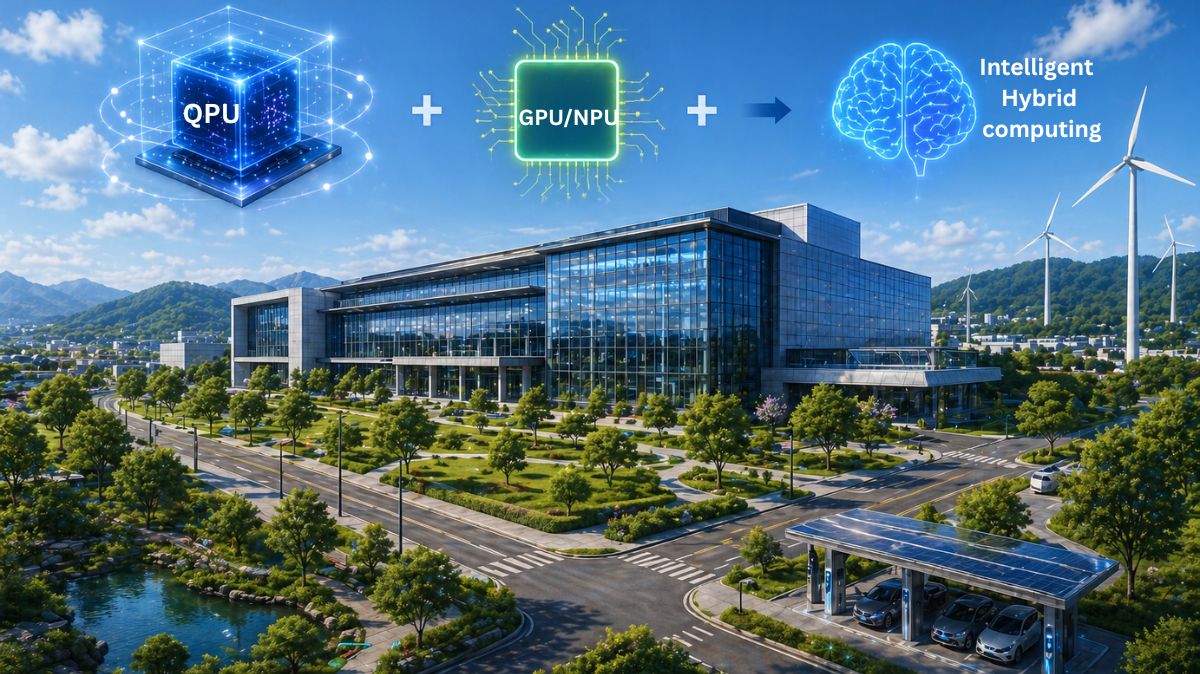
You can also read Gumi Gyeongbuk Province builds Quantum-AI Hybrid data center
From Bits to Qubits: The Fundamental Unit
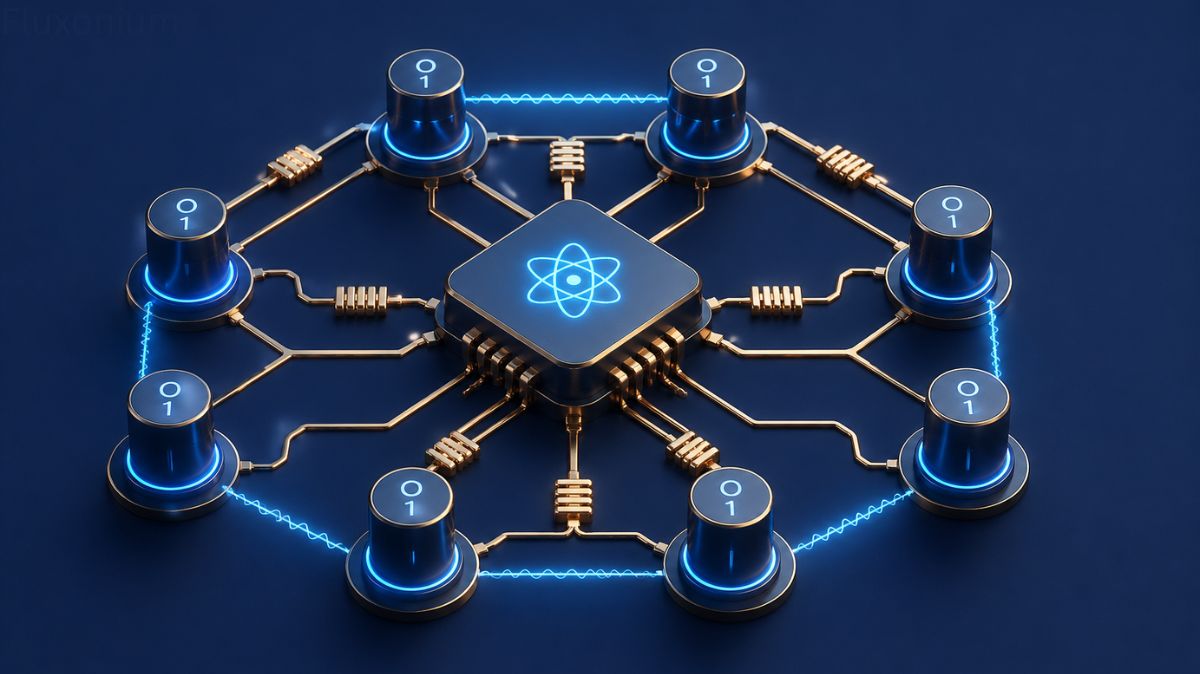
The qubit, or quantum bit, is the most basic building block of quantum information. A qubit is sometimes compared to a dimmer switch, whereas a classical bit is akin to a light switch that is either 0 or 1. A qubit is a continuous-valued mathematical concept that may be represented as a direction on a Bloch sphere.
Until it is measured, a qubit can exist in a state of superposition, which means it can be either 0 or 1 or a linear mix of both states at the same time. Because of this, a quantum system with n qubits may simultaneously represent 2n states; for instance, 300 qubits might represent more states than there are atoms in the visible world.
Entanglement and Interference in Core Mechanics
The two main processes that drive the power of quantum information are interference and entanglement.
Entanglement: Known by Einstein as “spooky action at a distance,” entanglement is the result of two or more qubits becoming connected to the point that their states are dependent on one another even when they are separated by great distances. When one entangled qubit is measured, its partner’s state is instantaneously determined, producing a high degree of correlation that is impossible for classical systems to match.
Interference: By modifying probability amplitudes, quantum algorithms become more potent. Constructive interference amplifies “correct” responses, whereas destructive interference eliminates “wrong” responses. Ensuring that the system collapses into the intended solution upon measurement is the aim of a quantum program.
The Information Limits: Basic Theorems
Several fundamental theorems deriving from unitarity, the idea that quantum information in the cosmos is conserved, govern the study of quantum information.
- No-Cloning Theorem: An unknown quantum state cannot be replicated exactly. This is the basis for quantum communication that is secure.
- The No-Teleportation Theorem states that a qubit cannot be completely “read” without being changed, nor can it be completely transformed into classical bits.
- The No-Deleting Theorem states that any qubit cannot be erased.
- A single qubit cannot be sent to several receivers at once, according to the No-Broadcast Theorem.
- The conservation of quantum information is demonstrated by the No-Hiding Theorem.
Furthermore, it is impossible to measure non-commuting observables accurately simultaneously due to the uncertainty principle. As a result, conclusive information about both non-commuting observables cannot be included in a quantum state at the same time.
You can also read Fluxonium Qubits improve Quantum with passive ZZ suppression
The History and Evolution
When quantum mechanics emerged at the beginning of the 20th century in response to conventional physics’ inability to explain events such as the ultraviolet catastrophe, the history of quantum information theory started. Werner Heisenberg and Erwin Schrödinger’s early formulations explained the dynamics of microscopic systems. Later, operator algebra was used by John von Neumann to develop quantum theory, which made it possible to quantify measurement.
Quantum information theory initially appeared in history in the 1960s through research on channel capacity, error probabilities, and optical communications. For the first time, scientists were able to separate and work with individual atoms with the invention of atom traps and scanning tunneling microscopes in the 1970s. Interest in using quantum effects for encryption began in the 1980s, particularly with the BB84 protocol created by Bennett and Brassard, which employed the idea that observation disrupts a system to produce communication that is impervious to eavesdropping.
When Peter Shor created an algorithm for factoring big numbers in 1994, it marked a significant turning point. This demonstrated that some issues, like the discrete logarithm problem, might be solved by quantum computers far more quickly than by any conventional Turing machine, endangering contemporary RSA encryption.
You can also read China Hanyuan No. 1 First Atomic Quantum for Industrial Use
Theoretical Underpinnings and Entropy
In many ways, quantum information theory is an expansion of classical information theory. Shannon entropy, which measures the uncertainty of a random variable, is used to assess information in classical theory. Von Neumann entropy, which describes the uncertainty or information of a quantum state by substituting density operators (ρ) for probability distributions, is its quantum counterpart. Similar to how Boolean logic gates are used to manipulate classical bits, quantum gates—physical unitary operators that rotate the Bloch sphere are used to process qubits.
Hardware Modalities
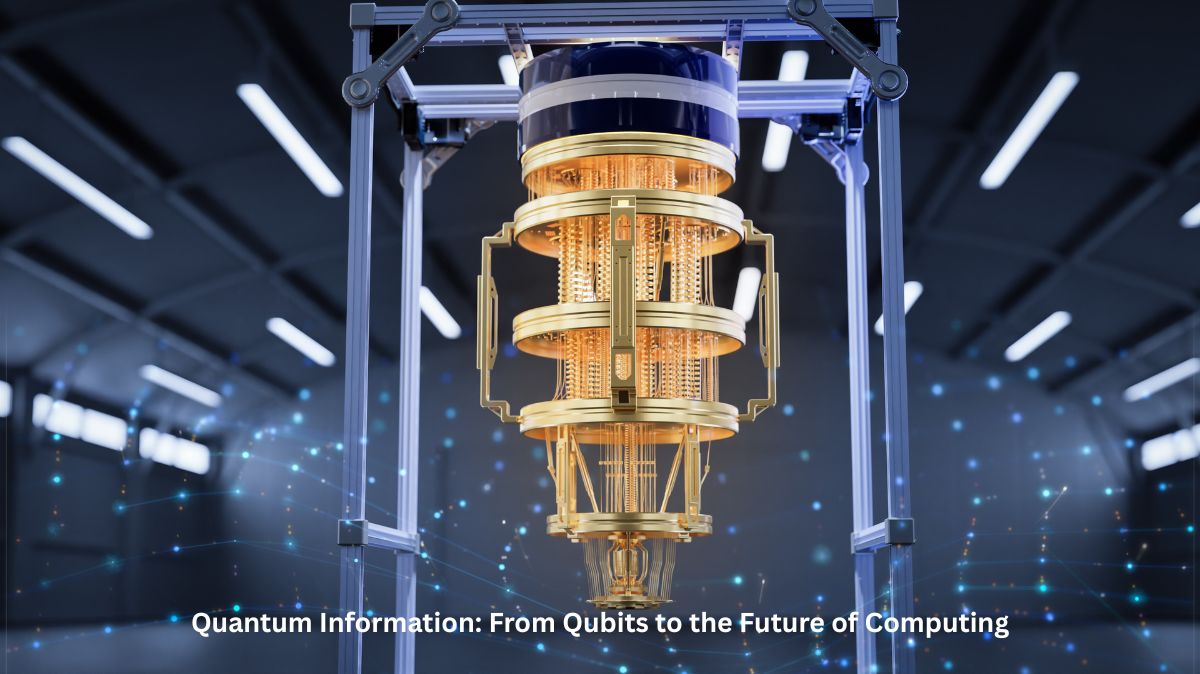
Because qubits are susceptible to decoherence—interference from the environment, such as heat, which causes them to lose their quantum properties—building a stable quantum processor is challenging. Numerous hardware strategies are presently under development:
- Superconducting Qubits: Used by Google and IBM, these rapid devices use small loops of superconducting wire and need temperatures lower than those seen in space.
- Neutral Atoms: To achieve great scalability, individual atoms can be trapped in arrays using lasers.
- High stability and extended coherence durations are achieved by using electromagnetic fields to suspend charged atoms in trapped ions.
- Photonic Systems: Make use of light particles, or photons, which are great for communication since they are difficult for the environment to interact with.
Modern Applications
Several useful branches of the discipline have developed throughout time:
- Quantum computing seeks to address challenging issues in machine learning, optimization (finance and logistics), and quantum chemistry (simulating molecules for drug development).
- Quantum Communication: Facilitates unconditionally secure data transport with Quantum Key Distribution (QKD). BB84, E91 (using entangled photon pairs), and B92 (a more straightforward two-state variant) are notable protocols.
- Superdense coding enables a sender to transmit two bits of classical information with just one qubit, whereas quantum teleportation uses two classical bits plus pre-shared entanglement to transfer a qubit.
- For navigation and imaging systems like MRI, quantum sensing offers unparalleled precision.
The NISQ Era and Its Prospects
We are currently living in the era of NISQ (Noisy Intermediate-Scale Quantum). Even if we have devices with hundreds of qubits, mistakes can still happen. Fault-Tolerant Quantum Computing, the “Holy Grail” of science, necessitates Quantum Error Correction (QEC). Logical qubits, which are collections of physical qubits that collaborate to fix faults brought on by decoherence and malfunctioning gates, are employed in QEC. In the end, quantum information views information as a physical characteristic of the universe that is governed by the peculiar and powerful laws of the subatomic domain.

Thank you for your Interest in Quantum Computer. Please Reply