Russia Unveils 72-Qubit Neutral Atom Quantum Computer: A New Frontier in Domestic Computing Sovereignty
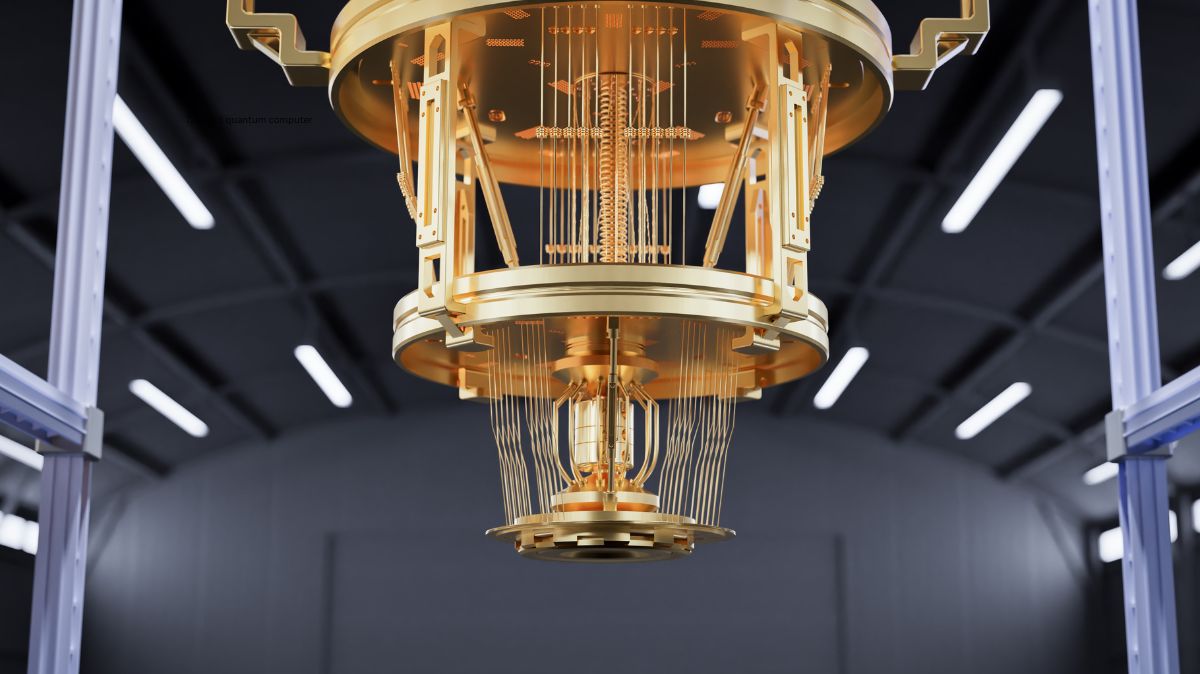
72 qubit quantum computer
Lomonosov Moscow State University (MSU) and Rosatom State Corporation researchers constructed and tested a 72 qubit quantum computer prototype, advancing the Russian quantum roadmap. Russia’s quest for a self-sufficient quantum environment advanced with its late 2025 announcement. After earlier advances in superconducting and ion-based architectures, this new device is the third home system to cross the “psychologically significant” 70-qubit threshold.
You can also read Quantinuum News 2025: Breakthrough Year for Quantum Utility
The Technology: Neutral Atoms and “Quantum Zones”
The main building pieces of the prototype are single neutral rubidium atoms. Neutral-atom systems employ atoms that are “nature’s perfect qubits” atoms that are similar and devoid of manufacturing flaws in contrast to superconducting circuits, which are etched onto solid-state chips and necessitate intense cryogenic cooling to almost absolute zero. High-focused laser beams called optical tezers are used to manipulate and hold these atoms in situ.
The MSU system’s novel three-zone architecture is one of its distinguishing characteristics. Stanislav Straupe, the head of MSU’s Quantum Technology Center’s quantum computing division, claims that the processor is physically separated into functional sections in order to increase efficiency and lower “noise”:
- Computation Zone: This is where active operations and logic gates are carried out.
- Quantum State Storage Zone: This area is used to “park” qubits while other qubits are being processed, enabling long-term state preservation.
- Readout Zone: The area where the qubits’ final states are measured in order to determine the computation’s outcome.
Researchers can greatly reduce the interference that frequently afflicts high-qubit computers by separating these activities. The MSU team effectively used the computing and storage zones during the current testing phase, and the third readout zone’s development is scheduled for the project’s subsequent phase.
You can also read Quantum Entanglement News: Rise of Tap-Proof Communication
Performance Metrics and the “NISQ” Era
The Russian team has stressed that fidelity, or the accuracy of operations, is the real measure of a quantum computer’s usefulness, even if sheer qubit count frequently makes headlines throughout the world. A two-qubit gate accuracy of 94% has been demonstrated by the 72-qubit machine.
This fidelity is a significant increase over earlier domestic prototypes, even though it is now below the 99%+ barrier needed for universal fault-tolerant computing. Practical testing of NISQ (Noisy Intermediate-Scale Quantum) applications is made possible by this degree of accuracy. These applications are helpful for urgent industry research because they are made to handle particular optimization challenges even in the presence of some external noise.
According to Rosatom’s Director of Quantum Technologies Yekaterina Solntseva, reducing mistake rates is crucial to bringing these skills up to the level needed to tackle challenging issues in business and finance.
Strategic Importance and Technological Sovereignty
This innovation is a key component of Russia’s larger plan to maintain technical sovereignty in the face of international sanctions and cutoff from Western IT giants like Google and IBM. Funding for the national quantum initiative, led by Rosatom, has totalled billions of rubles since 2020.
The accomplishment of the 72-qubit mark indicates that the high-precision lasers, vacuum chambers, and control electronics required to construct these complex devices from the ground up can be produced domestically. In addition to the technology itself, the project is an essential training ground for the upcoming generation. The team’s high proportion of graduate and undergraduate students working alongside senior specialists ensures that the human capital required for a long-term quantum industry is being developed in tandem with the technology, according to Vladimir Belokurov, dean of MSU’s Physics Department.
You can also read DeepQuantum: Unifying 3 Paradigms Of Quantum Computing
Global Context and the Roadmap to 2030
The neutral-atom technique has become quite popular worldwide, and businesses like QuEra (USA) and Pasqal (France) are also surpassing the 100-qubit threshold. Although Russia’s major focus is still on domestic industrial applications, its debut into this field at the 72-qubit level places it in direct rivalry with global leaders. Rosatom has found the following potential use cases:
- Logistics: Russian Railways routes and schedules are optimized.
- Energy: Modelling novel materials for nuclear power.
- Finance: Improving encryption and cybersecurity for the financial industry.
By the end of the decade, Russia wants to go from laboratory “proof-of-concepts” to industrial-grade hardware, and the MSU prototype fits that goal. By 2030, hundreds of high-fidelity qubits are to be achieved. By achieving this scale, logical operations with error correction would be possible, opening the door to algorithms that are currently unsolvable by even the most potent classical supercomputers.
Researchers are currently concentrating on scaling the optical tweezer arrays to accommodate additional atoms and incorporating the third readout zone into the operational cycle in order to accomplish this. In order to increase coherence times the amount of time a qubit can sustain its quantum state future iterations can possibly investigate switching from rubidium to other elements or hybrid systems.
In conclusion
The 72-qubit neutral-atom computer validates a new architectural concept in addition to being a scientific achievement. Russia’s achievements offer a workable, scalable substitute for the superconducting systems that have dominated the discourse for the last 10 years as the global competition for quantum supremacy heats up.
You can also read Scientists Test the Hawking Effect in Laboratory Black Holes

Thank you for your Interest in Quantum Computer. Please Reply