The 2025 Nobel Prize in Physics for Quantum Computing Foundations goes to Clarke, Devoret, and Martinis.
The 2025 Nobel Prize in Physics
John Clarke, Michel H. Devoret, and John M. Martinis have been named the recipients of the 2025 Nobel Prize in Physics. The three scientists were honored by the Royal Swedish Academy of Sciences for their groundbreaking work establishing the foundation for quantum computing by demonstrating quantum behavior in superconducting circuits.
“For the discovery of macroscopic quantum mechanical tunneling and energy quantization in an electric circuit,” they were specially recognized by the Nobel committee.
You can also read Quantum-Enhanced Computer Vision: An In-Depth look At Emerging Paradigms
A Forty-Year Trip to the Top
The three men undertook a series of experiments in the 1980s that resulted in the groundbreaking research. They demonstrated quantum tunnelling and energy quantisation in macroscopic superconducting circuits employing Josephson junctions. The study successfully bridged the conceptual gap between microscopic quantum mechanics and real-world engineering applications by demonstrating that charged particles in these circuits behave as a single quantum entity.
This groundbreaking study showed that even macroscopic systems can display clearly quantum activity, challenging the intuitions of classical physics. In particular, Professor Clarke and his group noticed that particles such as the electron seemed to “tunnel” defying expectations by passing past energy barriers that physics would normally consider impossible. Their research demonstrated that this phenomenon could be replicated in electrical circuits in the “real world” as well as in the subatomic realm.
The result is “wonderful news indeed, and very well deserved,” said Professor Lesley Cohen of Imperial College London, who also noted that their findings paved the way for the development of superconducting Qubits, one of the key hardware components used in quantum technologies.
You can also read NTT Research Inc Unveils World’s First Nonlinear Photonic Chip
Opening the Door to Strong Computing
Their discovery has had far-reaching and significant ramifications. These groundbreaking experiments made it possible to create programmable qubits in superconducting systems, which paved the way for contemporary quantum computing. Scientists are currently using this knowledge to create contemporary quantum chips, and big tech companies like Google and IBM are using the discoveries in their quantum computers today.
The scalability of these systems has been verified by further peer-reviewed research. Applications in simulation, cryptography, and next-generation computing all depend on the technology. “There is no advanced technology used today that does not rely on quantum mechanics, including mobile phones, cameras… and fibre optic cables,” the Nobel committee wrote, highlighting the ubiquitous significance of quantum mechanics.
You can also read Gorilla Technology Launches Quantum-Safe SD-WAN Initiative
Recipients Respond to the Honour
The three victors will split the 11 million Swedish kronor (£872,000), or almost $1.2 million, prize money.
Professor John Clarke of the University of California, Berkeley, described the news as “the surprise of my life” after expressing his surprise. He went on to say that he was “completely stunned,” adding that they “did not realize in any way that this might be the basis for a Nobel prize” when they completed the work forty years ago. He affirmed that the creation of the quantum computer is “in many ways the basis of” their finding.
Yale University professor Michel H. Devoret expressed his humility at sharing the award with his colleagues. The Nobel Prize “celebrates far more than the work of three individuals,” he acknowledged in a statement, but rather a “40 year journey by researchers worldwide.”
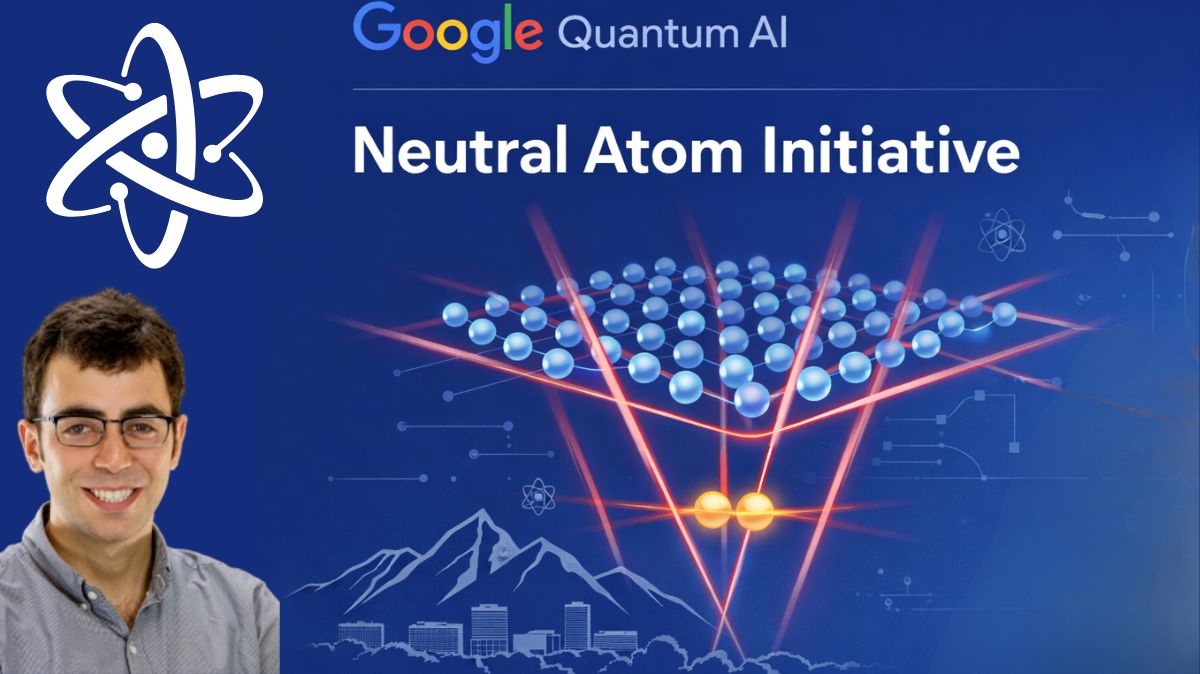
The winners are still influencing quantum technology. At Google’s Quantum A.I. unit, Devoret serves as the Chief Scientist at the moment. Martinis, a professor at the University of California, Santa Barbara, cofounded the quantum computing business Qolab after working at Google’s Quantum A.I. lab from 2014 to 2020. Using this technology, Clarke is working on equipment for the Axion Dark Matter Experiment.
You can also read Quantegrity E-Voting System lets Quantum-Resistant Elections



Thank you for your Interest in Quantum Computer. Please Reply