Novel Investigations Uncover Hidden Causes of Fluxonium Qubit Decoherence
In a research, a group of scientists from many institutions presented a novel way to identify the recurring noise that afflicts quantum computers. At the University of Massachusetts-Amherst, Ze-Tong Zhuang and Chen Wang lead the study, which presents a method known as “two-timescale relaxometry” for locating parasitic flaws that shorten the lifetime of quantum information. Through investigating high-coherence fluxonium qubits, the researchers found a distinct spectrum of quantum defects with lifetimes into the millisecond range, referred to as two-level systems (TLS).
You can also read Modeling Photon Statistics Using Two Level System in QED
The Challenge of Quantum Coherence
The process through which a qubit loses its quantum state as a result of interactions with its surroundings is known as decoherence, and it is one of the biggest obstacles to the creation of useful quantum computers. Parasitic two-level systems (TLS) in superconducting qubits have been recently shown to be the main cause of this decoherence. These TLS are tiny flaws that have the ability to “kill” the quantum information contained in the qubit by absorbing its energy.
The researchers found that these parasitic systems can actually have longer relaxation durations than the qubits they reside in, which is the time it takes to recover to a ground state. In the past, it has been challenging to characterize this relaxation as conventional methods depend on the Born-Markov approximation. Assuming that the environment has no “memory” of past encounters, this approximation may obscure real-world environmental memory effects, according to the researchers.
You can also read Qubit-Two Level Systems Interaction For Error Mitigation
A New Tool: Two-Timescale Relaxometry
The group, which includes partners from the University of Maryland and the Ecole Polytechnique Federale de Lausanne (EPFL), created two-timescale relaxometry to get around these restrictions. With this method, scientists may effectively and concurrently examine the qubit’s relaxation and that of its surroundings.
Within the frequency range of 0.1 to 0.4 GHz, the scientists used this technique on high-coherence fluxonium qubits. Since fluxonium qubits are made to be extremely resistant to specific kinds of noise, they are a perfect testbed for identifying subtle sources of decoherence, in contrast to the more widely used transmon qubits.
Detecting what happened
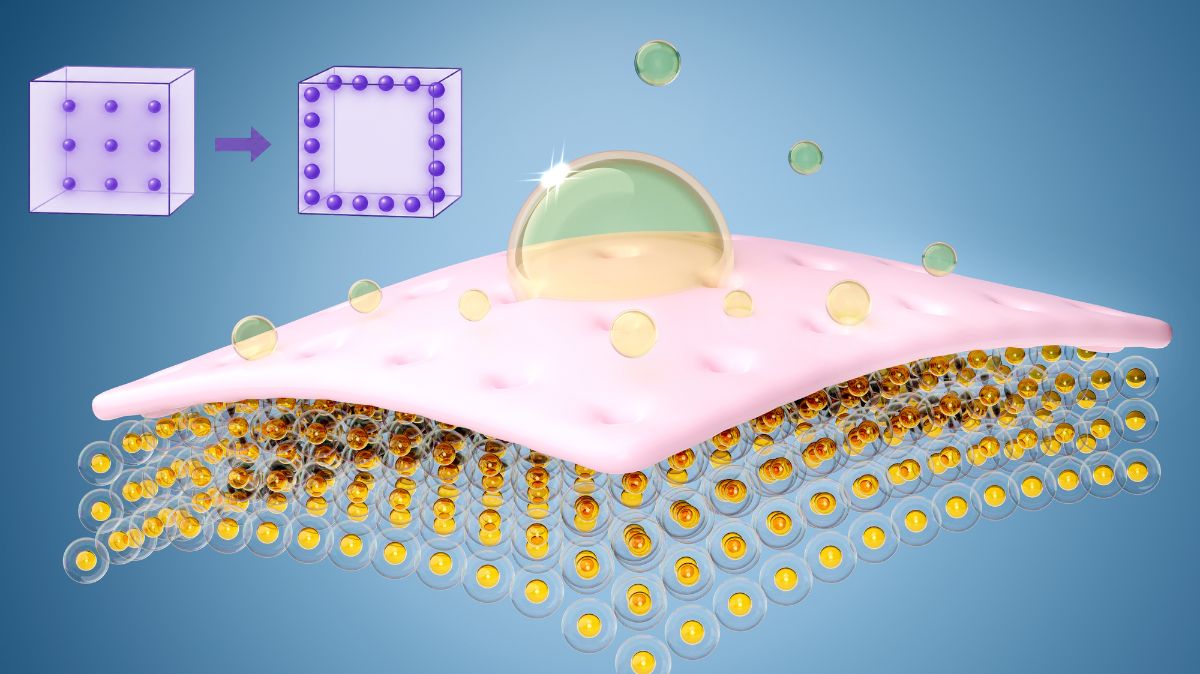
Using two-timescale relaxometry, a distinct spectrum of TLS with millisecond durations was discovered. These imperfections appear to be dispersed randomly throughout the aluminum oxide tunnel barrier of the Josephson junction chain of the fluxonium, according to the researchers’ findings.
These flaws’ spectral and volumetric densities, together with their average electric dipole, were found to be in agreement with TLS measurements made at far higher frequencies. This uniformity attests to the fact that these flaws are widespread in superconducting circuits working in many regimes.
You can also read Reflecting Light: Buckled Micro Mirrors for Quantum Networks
The Path to Noise-Protected Qubits
For the future of circuit quantum electrodynamics (QED), this finding has significant effects. For the creation of “noise-protected” qubits, the researchers contend that examining and addressing these junction chain flaws is essential. The goal of these next-generation qubits is to be intrinsically resistant to decoherence, but this can only be accomplished by completely removing or controlling the TLS identified in this work.
The researchers who worked on the paper are now employed by industry heavyweights, including SEEQC, Inc. and Google Quantum AI. Several high-level funds, notably the US Department of Energy’s Co-design Center for Quantum Advantage and the US Army Research Office’s QC-S5 and HiPS programs, sponsored the effort.
You can also read Stony Brook University News In New York’s $8.93B Innovation
Manufacturing and Cooperation
The experiment’s tangible tools were the result of sophisticated production processes. Designed by T. A. Masum, the planar fluxonium device was manufactured at MIT Lincoln Laboratory’s SQUILL Foundry. The Laboratory for Physical Sciences (LPS) Qubit Collaboratory donated funding for the fabrication.
It will be crucial to identify and eliminate tiny “memory” effects in the environment as quantum computing advances from the lab to the commercial sector. The team has given the community a more realistic perspective on the problem of quantum decoherence, which they hope will lead to a solution, by surpassing the Born-Markov approximation.


Thank you for your Interest in Quantum Computer. Please Reply