Researchers Make a Quantum Advancement by Reaching Beyond-Breakeven Fidelity for Entangled Logical Qubits
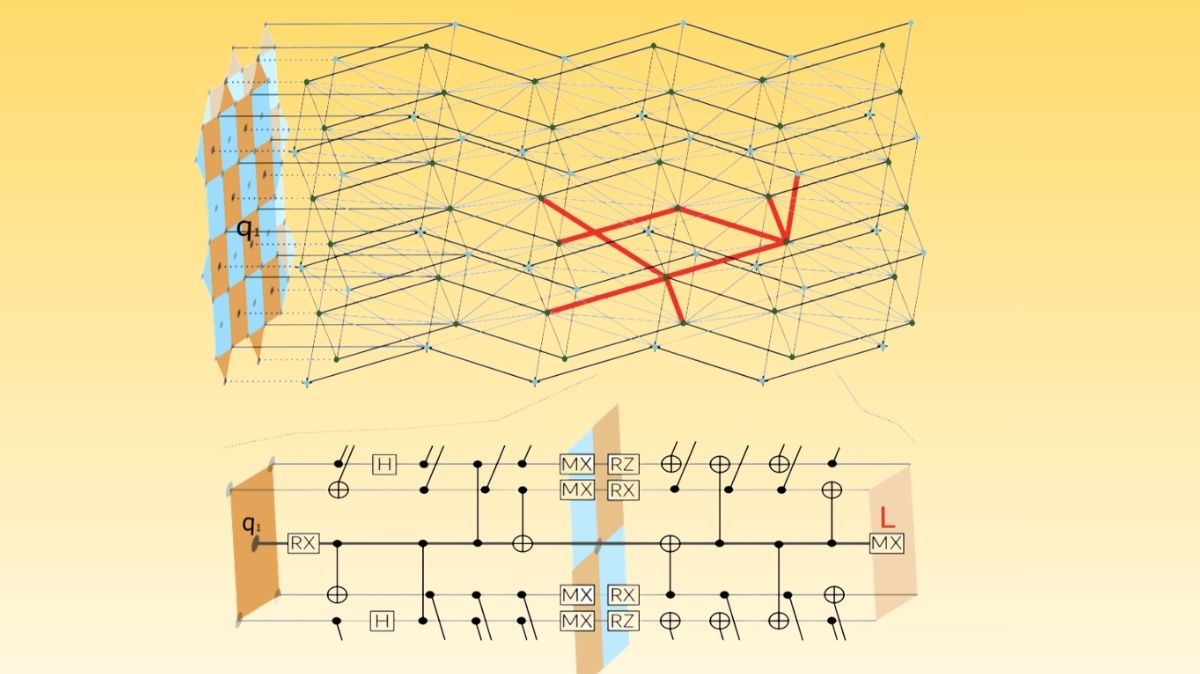
In a major step toward the development of fault-tolerant quantum computing, a group of researchers from USC and other schools has shown how to significantly reduce faults in quantum processors. Protected logical qubits beat unprotected physical qubits in the same environment, achieving “beyond-breakeven” performance by combining conventional quantum error correction (QEC) with a method called Logical Dynamical Decoupling (LDD).
The fragility of quantum information is one of the most enduring challenges in quantum physics, and the study tackles this issue in its early 2026 publication in Nature Communications. Complex calculations can be ruined by mistakes caused by qubits, which are the foundation of quantum computers and are infamously prone to noise from their environment.
The Limits of Standard Correction
Quantum Error Correction (QEC) codes provide the answer that the scientific community has long sought, yet they have a basic drawback. The purpose of standard codes is to identify and fix “physical errors” that impact individual qubits; nevertheless, they frequently fail to recognize logical errors, or mistakes that take place inside the protected “code space” itself. In their report, the researchers pointed out that the incapacity of such codes to identify logical mistakes is an intrinsic limitation. Under the direction of Arian Vezvaee and Daniel A. Lidar, the team suggested a hybrid approach to close this gap. They utilized Dynamical Decoupling (DD), a method that “averages out” noise using fast pulses, at the logical level.
You can also read Superconducting Quantum Circuits Stay Stable for Over a Year
A Hybrid Solution: LDD and NDD
Utilizing the logical operators or normalizer components of the QEC code as the actual decoupling pulses is the fundamental innovation. The system may suppress logical faults that the code would normally disregard with a technique known as Normalizer Dynamical Decoupling (NDD) or Logical Dynamical Decoupling (LDD).
The group used IBM’s transmon-based quantum computers, such as the 127-qubit ibm_kyiv and ibm_marrakesh systems, to test this approach. To convert two logical qubits into four physical ones, they used a technique known as the [] code. The ability of this particular code to identify faults using a procedure known as postselection, which discards flawed data, makes it a perfect testbed.
You can also read MEMS News: From 5G Roots to Quantum Refrigerators
Over the Breakeven Point
The hybrid method turned out to be a huge success. The faithfulness of entangled logical Bell states was shown to be greatly increased by the combination of Logical Dynamical Decoupling and postselection.
In particular, their average postselected encoding fidelity was 98.05%. During a 55 microsecond test, the protected logical qubits maintained a fidelity of around 92.89%, but the unprotected qubits’ performance declined far more quickly.
The experiment achieved the crucial “beyond-breakeven” milestone. The “breakeven” point in quantum computing is the moment at which the system’s best physical qubit and logical qubit perform equally well. The team demonstrated that the net benefit of their QEC-LDD approach surpasses the “overhead” or additional complexity needed to put the protection in place by going above and beyond this.
Taking on “Crosstalk”
ZZ crosstalk was one of the main adversaries in the experiment. Unintentional mistakes can arise from qubits’ “always-on” interaction with their neighbors in superconducting transistor computers.
In particular, the researchers made their Logical Dynamical Decoupling sequences resistant to this crosstalk and other control flaws. Both the logical flaws and the underlying physical faults might be suppressed at the same time by employing “universally robust” sequence families and staggered the pulses.”The LDD sequences suppress both physical and logical errors,” the scientists noted. The efficiency of the quantum computer was increased by this dual action, which led to a significantly reduced rate of rejected data during postselection.
You can also read Quadratic Coupling Generates Orthogonal Squeezed States
The Path Forward
This study demonstrates the highest fidelity for entangled logical qubits on a superconducting substrate to date. It offers a guide on how to maintain “small and nimble” quantum codes that are resilient enough to deal with noise in the actual world.
Although a distance-2 error detection code was the focus of the current experiment, the scientists pointed out that the QEC-LDD Theorem they proved is universal. It is theoretically applicable to bigger and more intricate codes, such as color codes or surface codes, which are employed in utility-scale quantum algorithms.
Subsequent investigations will concentrate on incorporating these hybrid approaches into active quantum algorithms and refining the sequences for specific hardware, including gadgets with manually deactivating qubit interactions using adjustable couplers. Thus far, high-fidelity logical entanglement has been successfully demonstrated, which is a decisive triumph over quantum decoherence.
You can also read Center for Relativity and Cosmology Advanced Gravity Research
Thank you for your Interest in Quantum Computer. Please Reply