Quantinuum Enters the Era of Large-Scale Logical Computing: Innovations in Hybrid HPC Integration and Error Correction
Quantinuum News
Quantinuum has formally announced the shift from experimental quantum hardware to the era of large-scale logical computing with several historic accomplishments. The business has overcome obstacles that were previously believed to be years away by showcasing “beyond break-even” performance with almost 100 logical qubits and using intricate hybrid workflows with the most potent supercomputers in the world.
The “Skinny Logic” Breakthrough
The company’s most recent quantum error correction (QEC) research is the most noteworthy milestone. Researchers in quantum mechanics have developed an extremely effective technique for constructing logical qubits, which are collections of entangled physical qubits that exchange information to shield it from noise. The researchers retrieved 64 error-detected and 48 error-corrected logical qubits using the 98-qubit Helios quantum processor.
Dubbed “Skinny Logic,” this accomplishment “cuts overhead to the bone” using high-rate encoding. The “no free lunch” rule of quantum physics refers to the trade-off that historically needed a large number of physical qubits to produce high-quality logical qubits. However, the researchers obtained a world-record 2:1 physical-to-logical ratio for error-corrected qubits by “nesting” super-efficient quantum error-detecting codes, particularly the now-famous “iceberg code”.
Importantly, in every test, these logical qubits performed better than their physical counterparts, often by a factor of 10 to 100. The “holy grail” of the business is this “beyond break-even” fidelity, which demonstrates that encoding data really increases computing reliability over bare hardware.
3D Representation of the Real World
Quantinuum conducted a large-scale simulation of quantum magnetism to demonstrate the usefulness of these logical qubits. The “all-to-all” connection of the Helios processor enabled researchers to simulate 3D material interactions, whereas conventional studies are restricted to 1D or 2D models to streamline computations. The system’s distinctive trapped-ion design, which includes mobile qubits that can communicate throughout the whole processor, enabled this.
As a further demonstration of system-wide entanglement, the group produced a 94-logical qubit GHZ state, or “cat” state, with a 94.9% fidelity. This test demonstrates the Helios hardware’s exceptional ability to sustain intricate entanglement beyond almost 100 logical units, a performance that broke earlier un-encoded marks.
Quantum-HPC Hybrid Reality
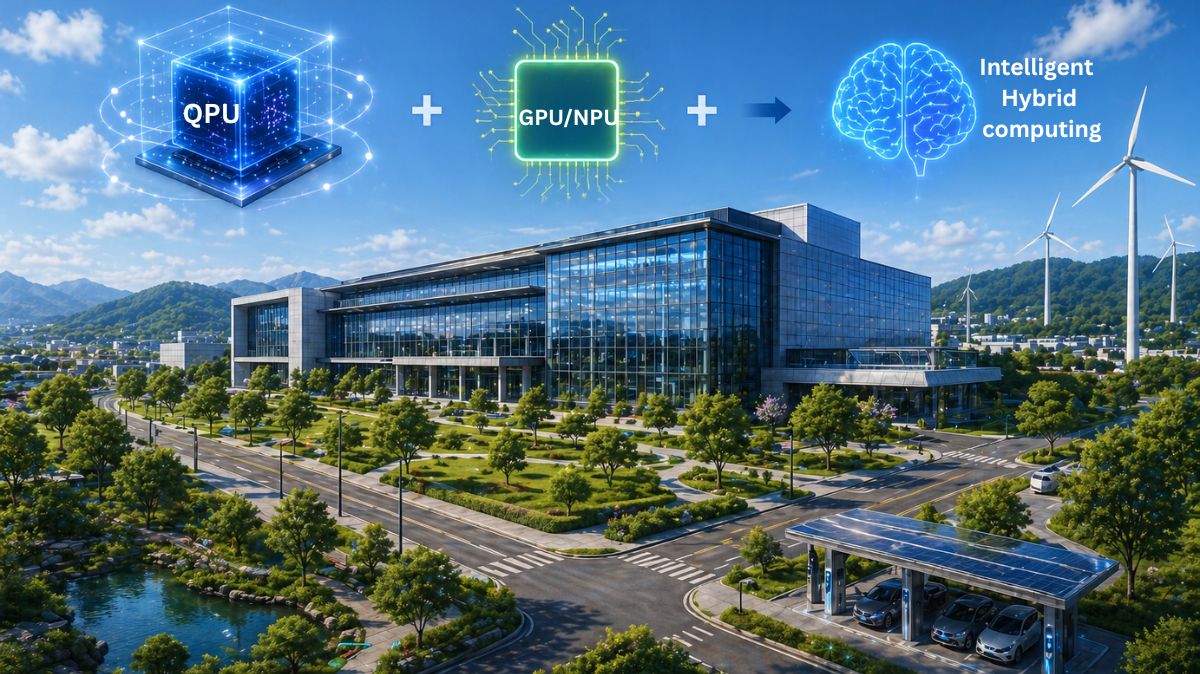
Quantinuum has shown that quantum computers are prepared to be integrated into current high-performance computing (HPC) ecosystems, going beyond pure quantum milestones. The Fugaku supercomputer, one of the most potent in the world, was combined with the Reimei quantum computer in partnership with RIKEN in Japan.
To investigate chemical processes in biomolecules like proteins, a comprehensive scientific methodology was carried out for the first time across these diverse structures. The intricate quantum mechanics of the molecule’s “active site” were modeled by Reimei, while Fugaku performed baseline electronic structure computations. By using a hybrid method, modern quantum technology can enhance classical systems, increasing the precision of materials research and drug development.
AI-Powered Exploration and Integration with NVIDIA
AI-driven algorithm discovery is accelerating the quest toward practical applications. A platform known as “the Hive” was utilized by Quantinuum in collaboration with Hiverge to develop quantum algorithms on its own. When compared to human-designed state-of-the-art versions, the resultant “Hive-ADAPT” algorithm showed an order of magnitude reduction in quantum resource needs.
The partnership between Quantinuum and NVIDIA has also resulted in a notable improvement in performance. The group increased logical fidelity by almost 3% by directly incorporating NVIDIA GPU-based decoders into the Helios control engine. Real-time decoding for quantum error correction is made possible by this integration, which is essential for scaling up future systems. Additionally, a Generative Quantum AI system named ADAPT-GQE produced training data for complicated chemicals like the pharmaceutical drug imipramine 234 times faster.
The Way Ahead
The route to universal fault-tolerance is no longer theoretical, as demonstrated by these combined findings, which range from seamless HPC integration to ultra-efficient error correction. Quantinuum is currently developing QCorrect, a future software product that will assist developers in automatically enhancing the performance of their own programs, using its error-correction technologies. According to researcher David Amaro, “Our work sets the bar for what more sophisticated fully fault-tolerant codes need to beat on hardware.” With Quantinuum’s ongoing expansion of its H-Series hardware and software stack, the industry has formally transitioned from the creation of infrastructure to its logical and practical implementation.


Thank you for your Interest in Quantum Computer. Please Reply