Quantum Logistics: UConn MSBAPM Students Secure Double Victory at QuantumUP! Hackathon
UConn MSBAPM
The University of Connecticut School of Business achieved a historic “double victory” at the recent QuantumUP! hackathon, providing a compelling example of how emergent technologies are moving from theoretical laboratory research into the commercial sector. The state’s greatest minds were challenged to apply advanced analytics and quantum-inspired logic to some of the most enduring logistical challenges facing modern infrastructure at the event, which took place on April 2026, at the UConn Graduate Business Learning Center.
The Master of Science in Business Analytics and Project Management (MSBAPM) program produced both of the winning teams, underscoring an important trend in higher education: the thorough incorporation of quantum computing concepts into conventional business and engineering curricula to address pressing, real-world issues. A $5,000 prize was given to each team for their creative methods of improving transportation efficiency, a vital area for the local and international economies.
You can also read UConn, Voyager Technologies News: Built Space Research Hub
The New Frontier: Quantum-Classical Hybrids
Technologies Commercialization Services (TCS) at UConn and QuantumCT, a project aimed at making Connecticut a leading worldwide center for quantum technologies, co-hosted the QuantumUP! hackathon. This event required competitors to seek beyond the boundaries of classical computing to identify efficiencies that were previously unattainable, in contrast to standard coding challenges that only use binary logic.
The Manhattan Mobility Synchronization Engine, created by Trishan Kundu, Maria Abraham, and Eldhose Kochakkan Varghesekutty, was one of the most notable projects. Their study focused on how public transportation, emergency services, and city logistics could be coordinated to lessen gridlock to manage New York City’s congested and frequently chaotic traffic patterns.
“Combining classical prediction with quantum optimization in a practical way was the main value of a project,” Kundu said. The researchers employed a hybrid strategy, utilizing quantum-inspired algorithms to optimize the response in real-time and classical machine learning to forecast traffic disruptions. Compared to traditional software, this technology enables the simultaneous examination of millions of variables, including emergency route priorities, taxi trip data, and weather conditions, much more quickly.
According to Kundu, the challenge forced the team to look beyond theory and concentrate on real-world applications, such enhancing transportation dependability and assisting emergency services in responding to accidents more quickly.
You can also read UConn Technology Incubation Program runs 6 Quantum Startups
Solving the “Last-Mile” Logistics Puzzle
The second winning team, which included Aditya Raj, Uday Pandey, and Suhas Narahari, concentrated on resource management and fleet travel. For large logistics companies, their project served as a high-level navigation and optimization system.
A project is similar to a smart navigation system for logistics companies, Raj explained. “It takes into account several factors like cost, time, and usage all at once instead of just finding the shortest route.”
The group created a real-time dashboard that enables users to modify inputs, like fluctuating demand or vehicle availability, and instantaneously obtain optimal outcomes. The team showed how businesses can lower their carbon footprint and operating expenses through better route planning by utilizing methods inspired by quantum annealing.
The MSBAPM students had to contend with strong teams from Yale University, Fairfield University, and the University of Hartford, thus this triumph was very difficult to achieve. Uday Pandey, a team member, said that the team felt well-prepared by their academic backgrounds and that the reasoning he gained from the tournament would be useful in data-driven, problem-solving professions in the future.
You can also read Arqit Quantum Inc Joins Tomorrow Street for Quantum Security
Faculty and Institutional Support
Faculty members who have pushed for the inclusion of quantum themes in business education kept a careful eye on the students’ progress. The students’ work demonstrates that “quantum advantage” is no longer a remote, theoretical term, according to MSBAPM program professor Jennifer Eigo. “They were able to use quantum as a key driver of progress to build concrete solutions to real-world problems,” she said.
The UConn School of Business, and the Operations and Information Management (OPIM) department in particular, have prioritized incorporating the most recent technological training into the classroom, according to Associate Dean David Bergman. This dedication guarantees that students are actively influencing the future of industry standards rather than only studying history. Professors like David Wanik, Anna Radziwillowicz, and John Wilson were commended by the students for imparting the technical and presentation skills required for success.
You can also read SBQuantum Company Oversubscribes $4 Million Seed Funding
The Broader Impact on Connecticut’s Economy
A broader strategic initiative to get Connecticut’s workforce ready for the “Quantum Age” includes the QuantumUP! event. The event was sponsored by major law firms and industrial partners, demonstrating the broad ramifications of quantum technology in areas such as ethics, legislation, and intellectual property.
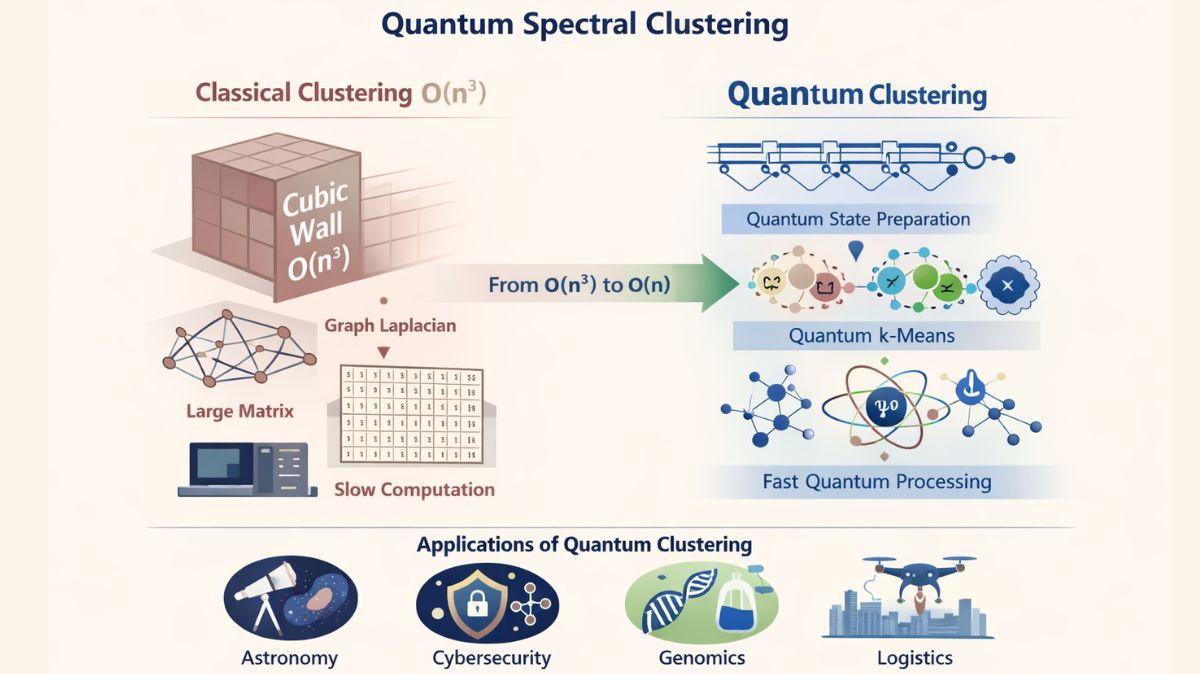
Students were forced to think about the social “why” in addition to the technical “how” throughout the hackathon. According to Aditya Raj, quantum computing is a novel approach to problem solving in which a system can investigate numerous options at once rather than examining a single solution at a time. For complicated issues like routing, scheduling, and large-scale optimization, this makes it exceptionally potent.
Trishan Kundu continued, “Quantum computing is not about replacing everything we already use today.” Its true potential lies in its ability to assist in solving specific classes of extremely difficult problems, including optimization and simulation, in conjunction with traditional computers. The technology is particularly fascinating at the moment because of its mixed approach.
The QuantumUP! hackathon’s legacy is still evident as the $5,000 prizes are given out and the students go back to their studies: the ability to use sophisticated, non-linear technologies to solve the world’s most linear problems moving people and goods from point A to point B as efficiently as possible will define the next generation of business leaders. These MSBAPM students’ accomplishments help UConn maintain its standing as a pioneer at the nexus of business strategy, data science, and the emerging quantum economy.
You can also read BTQ & Daou Data partner for Korean Quantum-secure Payments

Thank you for your Interest in Quantum Computer. Please Reply